honeywell th6220u2000 install manual
Honeywell TH6220U2000 Install Manual: Article Plan
This comprehensive guide details the installation of the Honeywell TH6220U2000 thermostat, covering everything from initial setup to troubleshooting common issues, utilizing available PDF resources.
We will explore wiring, programming, and accessing support, ensuring a smooth experience for users seeking to upgrade their home’s temperature control system;
The Honeywell TH6220U2000 is a non-programmable thermostat designed for reliable and straightforward temperature control within your home. It’s a popular choice for those seeking a simple upgrade from older, manual thermostats, or as a direct replacement for existing Honeywell models like the TH6210U2001.
This thermostat offers essential heating and cooling functionality without the complexities of advanced scheduling features. It’s known for its ease of use and compatibility with a wide range of HVAC systems. Numerous online resources, including readily available PDF manuals, provide detailed installation instructions and troubleshooting guidance.
Understanding the basics of your existing wiring and whether a C-wire is present is crucial before beginning the installation process. The TH6220U2000 aims to provide consistent comfort and energy efficiency through its accurate temperature sensing and responsive operation. This guide will walk you through each step, ensuring a successful installation.
Understanding the Package Contents
Upon opening your Honeywell TH6220U2000 package, carefully verify that all components are present before commencing installation. Typically, you should find the thermostat display unit itself, and a separate base plate designed for wall mounting.
Included are mounting screws and wall anchors to securely attach the base plate to various wall types. A wire label sheet is also provided – essential for accurately identifying your existing wiring during the removal of your old thermostat.
Crucially, the package should contain a comprehensive installation and user manual, often available as a PDF download from Honeywell’s website. While some models may include wire connectors, it’s always prudent to have your own compatible connectors on hand. Confirming all parts are present prevents delays during the installation process.
Safety Precautions Before Installation
Before beginning the installation of your Honeywell TH6220U2000 thermostat, prioritize safety by completely disconnecting power to your HVAC system at the circuit breaker. This prevents electrical shock and potential damage to the thermostat or your system.
Never work with wiring while power is on. If you are uncomfortable working with electrical wiring, consult a qualified HVAC technician. Carefully label each wire as you disconnect it from the old thermostat – accurate labeling is critical for correct reconnection.
Avoid installing the thermostat in direct sunlight or near sources of extreme heat, as this can affect its accuracy. Keep the thermostat dry during installation. Always refer to the PDF manual for specific safety guidelines and warnings related to your model;
Tools Required for Installation
Successfully installing your Honeywell TH6220U2000 thermostat requires a few essential tools. A Phillips head screwdriver is crucial for removing the old thermostat and securing the base plate. You’ll also need a flathead screwdriver for certain wiring connections.
Wire strippers are necessary to expose fresh wire for secure connections, ensuring proper functionality. A small level will help ensure the thermostat is mounted straight for aesthetic appeal and accurate readings.
Pencil for marking screw holes and wire labels are also recommended. A digital multimeter can be helpful for testing wire voltages (use with extreme caution!). Finally, have the installation manual (PDF) readily available for reference throughout the process.
Identifying Your Existing Wiring
Before disconnecting your old thermostat, carefully document the existing wiring. Turn off power to your HVAC system at the breaker box for safety; Take a clear photograph of the wiring connections – this is invaluable for reference.
Identify each wire by its terminal label (e.g., R, W, Y, G, C). Common wires include ‘R’ for power, ‘W’ for heat, ‘Y’ for cooling, and ‘G’ for the fan. A ‘C’ wire provides constant power and is often required for smart thermostats.
If you’re unsure about any wire, consult the old thermostat’s manual or a qualified HVAC technician. Incorrect wiring can damage your system. Label each wire with masking tape before disconnecting it to avoid confusion during installation.
C-Wire Requirement and Alternatives
The Honeywell TH6220U2000 often requires a ‘C’ wire (common wire) for consistent power, especially for its smart features. If your existing system lacks a C-wire, don’t worry – several alternatives exist.
One option is to use a C-wire adapter, which borrows power from other wires. These adapters are typically included or sold separately. Another solution involves running a new wire from your furnace or air handler to the thermostat location.
Consult a qualified HVAC technician for assistance with wiring modifications. Improper installation can lead to system malfunctions. Carefully review your system’s wiring diagram to determine the best approach for providing a consistent power source to the thermostat.
Step-by-Step Installation Guide
Begin by turning off power to your HVAC system at the breaker box. Carefully remove your old thermostat, noting the wire connections. Label each wire before disconnecting it – this is crucial!
Mount the Honeywell TH6220U2000 base plate, ensuring it’s level. Connect the wires to the corresponding terminals on the base plate, referencing the wiring diagram. Securely attach the thermostat display to the base plate.
Restore power to the HVAC system. The thermostat should power on. Follow the on-screen prompts for initial setup, including connecting to your Wi-Fi network. Double-check all connections and wiring for a safe and functional installation.
Removing the Old Thermostat
Before you begin, absolutely turn off the power to your heating and cooling system at the circuit breaker. This is a critical safety precaution! Carefully remove the cover of your existing thermostat, often by gently prying it off or releasing a latch.
Take a clear photograph of the existing wiring – this will be an invaluable reference during the installation of your new Honeywell TH6220U2000. Label each wire with the corresponding terminal letter before disconnecting them.
Loosen the screws holding the old thermostat base plate to the wall and carefully remove it. Ensure no wires are pulled loose during removal. Now you are prepared to mount the new base plate.
Connecting the Wires to the TH6220U2000 Base Plate
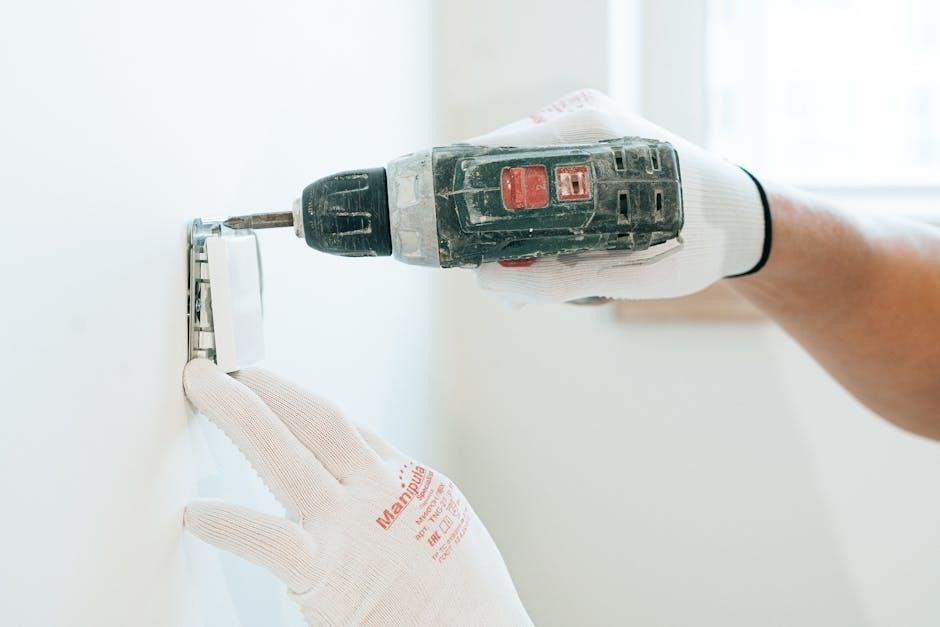
Using the photograph and labels you created, connect each wire to the corresponding terminal on the Honeywell TH6220U2000 base plate. Ensure each wire is securely fastened to its terminal – a loose connection can cause malfunctions.
Refer to the wiring diagram included with your thermostat; it’s crucial for correct installation. Common terminals include R (power), C (common – often required), W (heating), Y (cooling), and G (fan).
Double-check all connections against your wiring photo and the diagram. Gently tug on each wire to confirm it’s firmly held in place. Incorrect wiring can damage your system, so accuracy is paramount.
Mounting the Base Plate
With the wires securely connected, carefully position the TH6220U2000 base plate on the wall where your old thermostat was located. Use the included screws and wall anchors to mount the base plate, ensuring it’s level for a professional appearance.
If using wall anchors, drill pilot holes first to make screw insertion easier and prevent damage to the wall. Ensure the screws are snug, but avoid over-tightening, which could crack the plastic base plate.
Verify the base plate is firmly attached and doesn’t wobble. A secure mounting is essential for the thermostat to function correctly and remain stable over time. Double-check for any exposed wiring before proceeding.
Attaching the Thermostat Display
Once the base plate is securely mounted, gently align the thermostat display with the base. It should slide or snap into place with minimal effort; avoid forcing it, as this could damage the connection pins. Listen for a click to confirm a secure attachment.
Ensure the display is fully seated and flush against the base plate. Visually inspect the connection to confirm there are no gaps or misalignment. A properly attached display is crucial for clear visibility and functionality.
Before powering on, double-check that the display is firmly connected. A loose connection can cause intermittent issues or prevent the thermostat from operating correctly. This final step completes the physical installation process.
Powering On and Initial Setup
After securely attaching the thermostat display, restore power to your HVAC system at the breaker. The Honeywell TH6220U2000 should automatically power on. The display will guide you through an initial setup process, prompting you to confirm the date and time.
Next, the thermostat will likely ask about your system type – furnace, heat pump, or other. Select the appropriate option for accurate operation. You may also be prompted to configure basic settings like temperature units (Fahrenheit or Celsius) and zip code for weather updates.
Follow the on-screen instructions carefully. This initial setup is vital for ensuring the thermostat functions correctly with your specific HVAC system. Refer to the full PDF manual if you encounter any difficulties during this process.
Programming Basic Settings
Once the initial setup is complete, you can begin programming basic settings for your Honeywell TH6220U2000. Access the programming menu through the thermostat’s display interface. You’ll typically find options to set a schedule, defining different temperature settings for various times of the day and days of the week.
Consider your daily routine when creating a schedule – lower temperatures while you’re away or asleep to conserve energy. The thermostat allows for multiple periods per day, offering granular control over your home’s climate. Explore options for temporary holds, overriding the schedule for specific events.
Consult the full PDF manual for detailed instructions on advanced programming features. Proper programming maximizes comfort and energy savings.
Understanding the Display Icons
The Honeywell TH6220U2000 utilizes a variety of display icons to communicate its status and operation. A flame icon indicates the heating system is active, while a snowflake signifies cooling. A fan icon shows the fan is running, and its appearance may vary depending on the fan mode (auto or on).
Battery icons alert you to low battery levels, prompting replacement. Wi-Fi icons display the connection status, crucial for smart thermostat functionality. Pay attention to system status icons, which may indicate errors or specific operating conditions.
Refer to the comprehensive PDF manual for a complete icon glossary. Familiarizing yourself with these icons ensures you can quickly interpret the thermostat’s information and address any potential issues efficiently.
Fan Control Settings
The Honeywell TH6220U2000 offers flexible fan control options to optimize comfort and energy efficiency. You can select “Auto” mode, where the fan runs only during heating or cooling cycles, ensuring efficient operation. Alternatively, choose “On” mode for continuous fan operation, improving air circulation and potentially filtering allergens.
Some models feature a “Circulate” setting, periodically running the fan to maintain consistent temperatures throughout your home. Adjusting these settings is typically done through the thermostat’s menu, accessible via the display buttons.
Consult the detailed PDF manual for specific instructions tailored to your model. Understanding these fan control settings allows you to customize your system for optimal comfort and energy savings.
Troubleshooting Common Issues
Encountering issues with your Honeywell TH6220U2000? Several common problems have straightforward solutions. If the thermostat isn’t powering on, verify the C-wire connection and check the circuit breaker. Incorrect temperature readings often indicate improper calibration; refer to the manual for calibration instructions.
Connectivity problems, if applicable to your model, may require resetting the thermostat or checking your Wi-Fi network. A comprehensive troubleshooting section is included in the official PDF manual, offering detailed guidance for various scenarios.
Remember to consult the manual before attempting any repairs, and if issues persist, contact Honeywell customer support for assistance.
Thermostat Not Powering On
If your Honeywell TH6220U2000 fails to power on, the first step is to verify the power supply. Crucially, confirm the C-wire is securely connected to both the thermostat baseplate and your HVAC system’s control board. A loose or missing C-wire is the most frequent cause of this issue.
Next, check the circuit breaker dedicated to your HVAC system to ensure it hasn’t tripped. If the breaker is tripped, reset it and attempt to power on the thermostat again. Inspect the wiring connections at both the thermostat and the furnace/air handler for any loose wires or corrosion.
Refer to the installation manual’s wiring diagrams for accurate connection points. If problems persist, consult a qualified HVAC technician.
Incorrect Temperature Readings
If the Honeywell TH6220U2000 displays inaccurate temperature readings, several factors could be at play. First, ensure the thermostat isn’t directly exposed to sunlight, drafts, or heat-generating appliances, as these can skew the readings. Verify the thermostat is level on the wall; an uneven installation can affect accuracy.
Check for obstructions near the thermostat that might impede airflow. Utilize the thermostat’s calibration feature, if available, to adjust the temperature reading to match a known accurate thermometer. If the issue continues, inspect the temperature sensor for damage or debris.
Consult the manual for specific calibration instructions. If calibration doesn’t resolve the problem, professional HVAC assistance may be required.
Connectivity Problems
Experiencing connectivity issues with your Honeywell TH6220U2000? Begin by verifying your home’s Wi-Fi network is functioning correctly and that the thermostat is within range of the router. Ensure the correct Wi-Fi password was entered during setup; double-check for typos. Restart both your router and the thermostat – a simple reboot often resolves temporary glitches.
Confirm the thermostat is compatible with your Wi-Fi network’s frequency (2.4 GHz is generally required). Check for firmware updates within the Honeywell Home app, as these often include connectivity improvements. If problems persist, try resetting the thermostat’s network settings and re-establishing the connection.
Refer to the full PDF manual for detailed troubleshooting steps and contact Honeywell support if needed.
Accessing the Full PDF Manual
For comprehensive guidance beyond this article, the complete Honeywell TH6220U2000 installation and user manual is readily available in PDF format. Numerous online resources host this document, offering a detailed walkthrough of every aspect of the thermostat, from initial setup to advanced programming features.
A quick online search for “Honeywell TH6220U2000 manual PDF” will yield several direct download links. These manuals typically span around 32-44 pages, containing detailed diagrams, wiring schematics, and troubleshooting advice. Having the PDF readily accessible during installation is highly recommended.
The PDF provides in-depth explanations, ensuring a smooth and successful installation process. It’s a valuable resource for resolving any uncertainties or addressing specific installation challenges.

Warranty Information and Customer Support
Honeywell Home products, including the TH6220U2000, are backed by a limited warranty, protecting against manufacturing defects. The specific terms and duration of the warranty can vary, so it’s crucial to review the documentation included with your thermostat or visit the official Honeywell Home website for details.
For customer support, Honeywell offers multiple channels. You can access their online support portal for FAQs, troubleshooting guides, and downloadable resources. Direct contact with customer service is also available via phone or email, providing personalized assistance with installation, programming, or any issues you may encounter.
Ensure you have your thermostat’s model number and date of purchase readily available when contacting support. Honeywell’s dedicated team is equipped to help you maximize your thermostat’s performance.
Frequently Asked Questions (FAQ)
Q: Where can I find the complete Honeywell TH6220U2000 manual? A: The full manual is readily available as a PDF download on various websites specializing in appliance documentation, including those dedicated to Honeywell Home products.
Q: Is a C-wire required for installation? A: The TH6220U2000 often requires a C-wire for consistent power. However, alternatives exist, such as using a C-wire adapter if your existing wiring lacks one.
Q: What if my thermostat isn’t powering on? A: First, verify the wiring connections are secure. Ensure a C-wire is properly connected, or the adapter is functioning correctly. Check your breaker panel for tripped circuits.
Q: Can I access the manual on my mobile device? A: Yes, the PDF manual can be easily viewed on smartphones and tablets.
Related Posts
pixma ts3522 manual
Lost your Pixma TS3522 manual? No stress! Find a clear, easy-to-follow guide right here. Print, scan, & connect with confidence! ✨ #PixmaTS3522

troy bilt bronco rototiller manual
Can’t find your Troy-Bilt Bronco rototiller manual? 2 Bears & Counting has free downloadable manuals to get you back to tilling! Easy access & troubleshooting.
washington driver’s manual
Get ready to drive in Washington! Discover the rules of the road, licensing steps, and tips to pass your test with the official Washington driver’s manual.